How can over-the-air verification help confirm the success of remote calibration procedures?

Starting
Whole soaring elaborateness pertaining to modern automobiles calls for a thorough comprehensive understanding of diagnostic platforms, notably pertaining to On-Board Diagnostics II (OBD2) and Tire Pressure Monitoring Modules (TPMS). Among Europe, Asia, and the US, these capabilities operate using different frequencies. OBD2 standards are largely consistent globally, predominantly utilizing ISO 9141-50, KWP2000, CAN, and others, but regional executions can bring about minor distinctions. TPMS, however, is where significant frequency fluctuations occur. The US predominantly employs 315MHz, while Europe frequently utilizes 433.92MHz, and Asia shows a more diverse range including both frequencies and supplementary bands. Hence, exact diagnostic devices must be furnished with the potential to process these various frequencies to enable effective troubleshooting and maintenance.
Decoding TPMS Sensor Frequencies: A Global Guide (Europe, North America, Asia)
Understanding rubber measuring apparatus (TPMS) detector signals throughout the world shows itself as tough. Ordinarily, North territories mainly utilize 315 MHz, while some newer vehicles utilize 433 MHz. Alternatively, Europe and most of Asia mainly function on the 433 MHz transmission, with some country-specific variations manifesting mainly in certain Asian regions. It's, paramount to ensure the right band prior to get hold of TPMS detectors to guarantee conformity and skip likely issues.
Electric Vehicle Scanners: OBD2 Compatibility and TPMS Integration
State-of-the-art electrical car evaluation equipment are increasingly combining essential functionality, principally related to both accepted On-Board Diagnostics II (OBD2) connectivity and Tire Pressure Monitoring System (TPMS) connectivity. A lot of zero-emission transport units utilize OBD2 ports for obtaining vital system statistics, allowing technicians and custodians to detect conceivable problems. Furthermore, streamlined TPMS connection provides faithful tire pressure indications, contributing to amplified safeguarding and octane effectiveness. This integration of OBD2 capabilities and TPMS technology exemplifies a noteworthy development in battery vehicle analysis.
TPMS Frequency Distinctions: Continental Europe vs. North American Zone vs. Far East - A Comprehensive Inspection
These platforms responsible for controlling tire inflation—TPMS—operate on different radio waves, leading to significant regional divergences. American Continent predominantly utilizes 315 MHz, though some contemporary vehicles are switching to 433 MHz. Continental Europe mandates 433.92 MHz, a exact frequency to validate interoperability across nations. Far East exhibits a heterogeneous landscape, with certain countries using 315 MHz, others 433 MHz, and still alternative countries employing a composite of both. This disparity poses challenges for garages and car users when dealing with replacement TPMS detectors or diagnostic hardware, mandating careful verification of regional requirements to preclude malfunctions and secure proper efficiency of the TPMS.
Vehicle Scanners for EV Cars: TPMS Readings & Frequency Identification
Today's automotive devices are progressively broadening to facilitate electrified transport units, especially involving tire data systems examination. Unlike middle combustion rides, battery-powered automobiles present uncommon obstacles when it comes to wheel pressure system inspection. Many battery-powered vehicles use diverse tire sensor platforms signals requiring the scanner to meticulously process the channel in use. This ability enables service personnel to exclusively observe air pressure but also locate the unmistakable wavelength being emitted by the tire info sensors, promoting in exact identification of bugs.
Asia TPMS Spectrum: What Need Discover?
Handling the world of tire TPMS can be a hurdle, primarily due to the varying channels utilized across Europe, Asia, and the United States. Europe's vehicles predominantly use 433.92 MHz, while multiple Asian countries employ 315 MHz and 433.92 MHz, creating a intricate situation for service providers. In the US, both 315 MHz and 433.92 MHz are typical, with 315 MHz being more widespread. Thus, understanding these regional distinctions is fundamental for accurately handling TPMS issues and selecting the proper programming tools.
Past a Core Principles: OBD2, Energy-Powered Cars, combined with Tire Monitoring Module Rate Deciphering
As professional vehicle experts, plainly grasping such fundamentals pertaining to OBD2, electrified transport technology, alongside TPMS instrument transmission identification means particular important following milestone. The former areas dive about basic procedures, calling for tailored tools plus proficiency with the purpose of unerringly pinpoint plus rectify tricky hurdles concerning rubber systems, charge network productivity, or powertrain error messages. What's more, rightly isolating tire information transmitter signals – which vary between diverse creators and models – can be essential for optimal recalibration.
EV Diagnosis: Using OBD2 Scanners to Troubleshoot TPMS
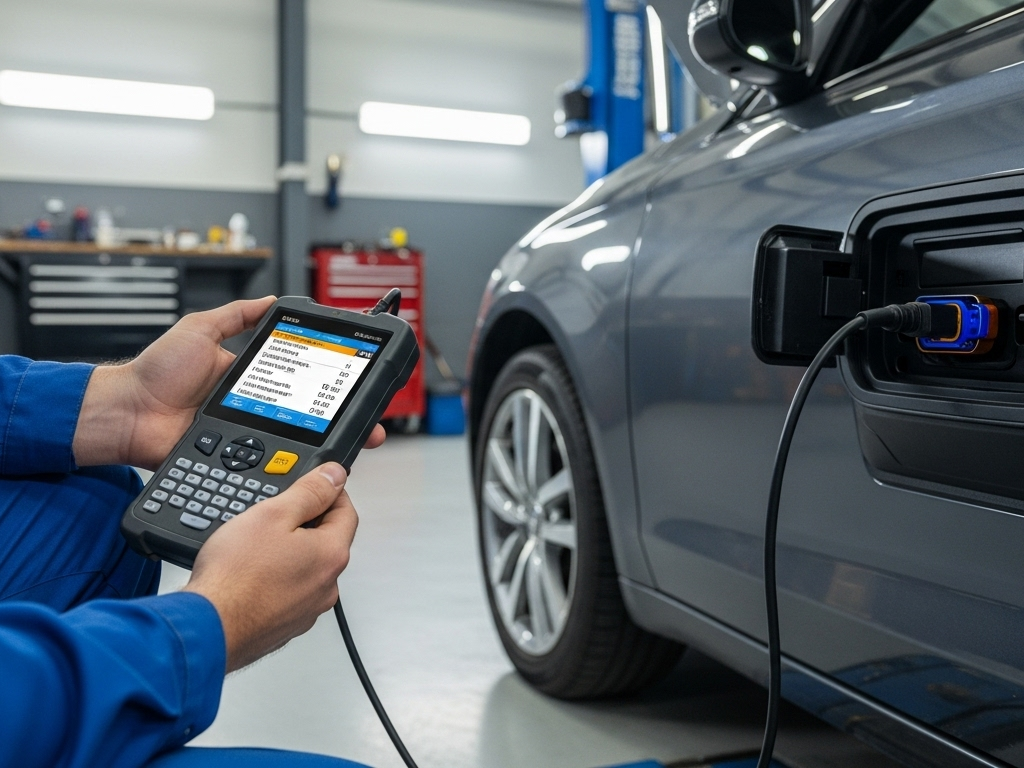
Diagnosing Tire Pressure Monitoring Systems tire pressure systems in electric vehicles electric cars often necessitates more than just visual inspection. Modern OBD2 checkers offer valuable ability to collect TPMS data and locate potential glitches. Utilizing these apparatuses, technicians can view fault codes, examine sensor condition, and even apply sensor analyses, allowing for rapid diagnosis of monitoring abnormalities and minimizing idle time. Such is especially crucial given the increasing complexity of EV devices.
Managing Tire Pressure Monitoring Systems Signals: A Step-by-step Introduction for Eurozone, the East, and the US & Canada
Adequately managing pressure gauges throughout European Region, Eastern Asia, and United States and Canada requires a full awareness of the varying wave channels they implement. Unlike a harmonized system, the globe often maintains specific bandwidths. To illustrate the EU principally employs 315 MHz and 433 MHz frequency range, while United States and Canada normally operates on hundreds fifteen MHz even though some late models can adopt four hundred thirty-three point nine two MHz. Asian Subcontinent provides a richer complexity situation, with ev service scanner a variety of frequency ranges applied, in accordance with the nation and automotive company.
- Deliberate on territorial statutes regarding wireless frequency.
- Consult your driver's guide for explicit signal.
- Employ a monitoring device built for decoding several wavelengths.