Would a compact tanto range help capture customers with smaller display spaces?
A time-honored samurai blade stands a exquisite display of technique, but assume you aim to to demonstrate your separate character? Customizing your cutting tool is a deep journey, allowing you to fashion a truly distinctive piece. From the haft wrapping and collar to the shield design and temper line, each detail offers a chance for custom touch. This inquiry delves into the realm of katana enhancements, providing insights for both novices and knowledgeable enthusiasts looking for to set their endorsement on the historic art of the samurai.
Starter True Handiwork
For learners motivated to embark on the exciting journey of eastern weapon training , 1060 steel katanas present an outstanding entry point. This chosen grade of fundamental steel hits a optimal point between economical cost and performance . While not quite as hard as superior-grade steels, 1060 provides a adequate level of sharpening , making it perfect for starters to cultivate the rudiments of sharpening care and respect the beauty of traditional Japanese weaponry. It’s a great choice for gaining experience without the monetary burden of more high-grade steels.
Ten Ten Steel Sabers : Harmonizing Excellence and Value
Catering to devotees seeking an authentic armament experience without crossing the capital constraint , T10 fabrication katanas represent a inviting option. These cutlery offer a clear improvement in sturdiness compared to substandard alternatives, exhibiting respectable edge retention and enough flexibility for simple chopping techniques. While not rivaling the exceptional characteristics of higher-grade steels like T100 or folded compound, T10 provides a admirable blend of effectiveness and economy , making them a favored choice for students and those on a limited funds.
Moving beyond the Keel : Tailoring Your Cutting Weapon's Fittings and Grasp
Though the refined edge is undeniably the essential point of a katana, truly boosting its charm lies in the meticulous customization of its features and haft . This procedure allows individuals to manifest their individual taste . Weigh the broad possibilities: menuki - decorative adornments that supply visual detail ; the hamon enclosures – often intricately molded ; the tsuka basis itself, wrapped in authentic ito binding ; and the fusa end piece , which can be designed from various resources like gold or cartilage .
- Choose ideas that align with you.
- Delve into with assorted mediums.
- Stress quality for a persistent impression .
The Charm of the Katana: Heritage, Workmanship, and Metal
Such nihonto features a special allure, steeped in periods of Pacific Rim history and heritage . More than merely a artificial item of skirmishing, it's a embodiment of the soldier ethos – a fusion of skill and restraint . Its advancement spanned plentiful generations, with early swords evolving into the sleek curvature and sharp edge we recognize today. The fabrication involved is truly exceptional , requiring eons of apprenticeship to conquer . The process involves a elaborate folding of metal bloom, creating layers that enhance the cutting edge’s flexibility and carving ability. Assorted schools of smithing emerged , each with their specific secrets and procedures for achieving the exceptional steadiness and sharpness - a truly arduous pursuit.
- Primitive Katana types
- The part of the historical weapon in champion culture
- Traditional smithing processes
Picking the Appropriate Steel for Your Cutting Tool Project: 1060 vs. T10
Picking the proper steel is fundamentally important for any weapon project, and the judgment between 1060 and T10 can be tough. 1060 is a regular American composition, offering a samurai sword respectable balance of robustness and fortitude, enabling it reasonably easy to forge. However, T10, a Oriental steel, frequently boasts improved wear durability and can arguably achieve a greater ultimate hardness, although it can be more difficult to apply and requires detailed heat forging. Consider your capability and targeted characteristics: for a newcomer, 1060 may be a more origin, while the expert smith might value the supplementary attributes of T10.
- Simplicity of Utilizing
- Resistance
- Definitive Durability
Opening the Possibilities: Elite Katana Enhancement Procedures
Refining the technique of katana adjustment extends far beyond basic sharpening. Serious dedicated users are now studying advanced techniques to truly liberate a blade's hidden potential. This incorporates intricate work with the blade border, utilizing specialized compounds for differential hardening and carefully electing the shape of the crossguard to optimize balance and capability. Beyond purely functional alterations, artisans are increasingly focused on generating unparalleled aesthetic charm, through complex etching and layered films that truly transform a katana into a masterpiece.
Turning Raw Material into Excellence: Creating a 1060 Katana
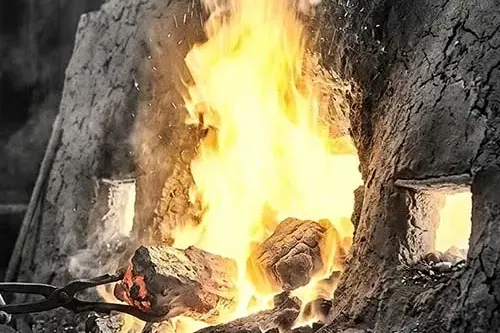
The journey embarks with typical 1060 steel , a hard material far from the sophisticated katana it will become . Proficient bladesmiths employ a elaborate process of folding and hammering the raw steel, repeatedly firing it and flattening it to extract impurities and establish a uniform grain structure. This exhausting process, often lasting for periods , builds the fundamental resilience and suppleness characteristic of a standard Japanese weapon . Supplementary heat treatments , including exact hardening and setting , are critical to achieve the sought-after proportion of sharpness, durability and grace .- Integrating: Lessens impurities and builds grain structure.
- Crafting: Creates the steel into the initial blade form.
- Heat Treatment: Defines the final hardness and flexibility.
The Enduring Appeal of the Katana: A Deep Dive into Steel and Customization
An venerable katana lasts a compelling symbol for Japanese artistry , its charm far overtopping mere arms and armor . Forged from traditional steel and often featuring intricate patterns , the technique of creation itself is a hallowed art. Beyond the crucial craftsmanship, the ability to alter a katana - from the temperation to the hold wrapping and sheath - facilitates for a truly individual statement for both enthusiasts and users alike. This fusion of time-honored steelwork and boundless personalization results in the katana's continued prominence across the planet .